Learning Outcomes
i. Identify the common causes and types of kidney stones.
ii. Understand the medical interventions available for the treatment of kidney stones.
iii. Recognize the impact of kidney stones on homeostatic balance and kidney function.
i. Causes and Types of Kidney Stones:
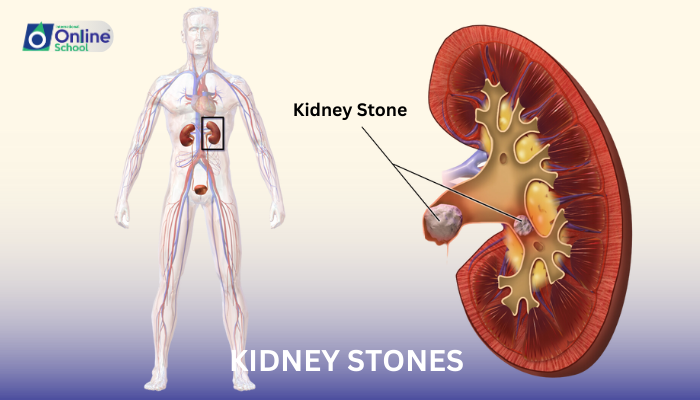
Kidney stones are hard deposits made of minerals and salts that form inside the kidneys. They can be caused by several factors:
Supersaturation of Urine: High levels of certain substances in urine, like calcium, oxalate, urate, cystine, xanthine, and phosphate, can lead to stone formation.
Dehydration: Insufficient water intake can lead to concentrated urine, where minerals can crystallize and form stones.
Diet: A diet high in salt, sugar, or protein can increase the risk of certain types of stones.
Genetic Factors: Some individuals may be genetically predisposed to kidney stone formation.
ii. Medical Interventions for Kidney Stones
Lithotripsy: A non-invasive procedure that uses shock waves to break stones into smaller fragments that can be passed in the urine.
Ureteroscopy: A small scope is passed through the bladder into the ureter to remove stones.
Percutaneous Nephrolithotomy: A surgical procedure to remove larger stones directly from the kidney.
Medications: Certain medications can be used to manage the pain caused by kidney stones and to treat underlying metabolic conditions contributing to stone formation.
iii. Impact on Homeostatic Balance
Obstruction: Stones can obstruct the flow of urine, leading to pain and potential kidney damage.
Infection: Obstructions can also lead to urinary tract infections, further complicating the condition.
Renal Function: Large or untreated stones can affect the kidneys' ability to filter and regulate the balance of fluids and electrolytes.
In conclusion, kidney stones are a painful condition that can have significant effects on homeostatic balance and kidney function. Understanding the causes of kidney stones is important for prevention and management, and various medical interventions are available to treat this condition. Proper management not only addresses the immediate symptoms but also works to restore and maintain the body's homeostatic balance.
